

Treatment Spectrum

Foot surgery.
Movement starts with the foot.

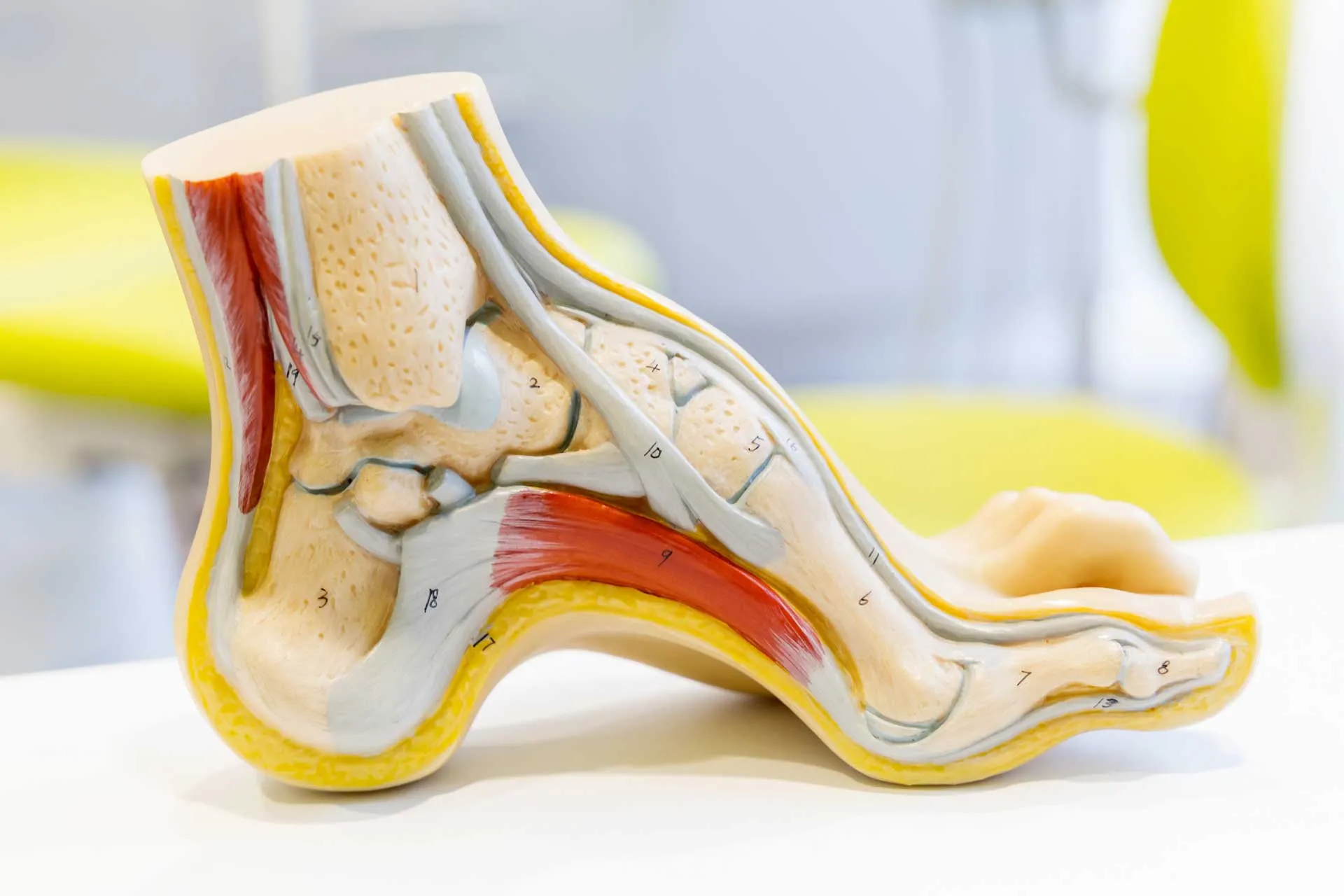
Complaints and disorders of the foot and ankle are treated in our practice according to the latest scientific standards. We cover the full spectrum — from conservative treatment to minimally invasive surgery.

As a foot treatment facility certified by the German Diabetes Society (DDG), we are particularly experienced with diabetic foot syndrome. Dr. med. Michael Scherer is known beyond the region for his work in foot surgery — a member of the German Association for Foot and Ankle Surgery and the German Foot & Ankle Society.

Specialised care Guideline-based —
with the whole foot in view.
Treatment process

From diagnosis
to pain-free walking

Conservative before surgical — we explore every non-surgical option before recommending an operation.

Diagnosis

History, clinical examination, pedobarography and X-ray in a single session.

Conservative first

Insoles, physiotherapy, shockwave therapy — we exhaust the non-surgical options first.

Tailored surgery

If needed: minimally invasive or open — matched to your diagnosis, expectations and lifestyle.

Dressing & shoe

Special forefoot off-loading shoes allow early mobility — we show you how.

Follow-up care

Gradual return to full weight-bearing and check-ups at our practice — until you walk entirely pain-free.

What we treat

Common
foot complaints

A selection of the most common indications we see in our consultations — choose a diagnosis to see its cause, symptoms and treatment.

Achilles tendon problems

Inflammation or rupture of the body's strongest tendon.

Cause
Overuse, one-sided athletic strain, degenerative changes or acute injury.
Symptoms
Tenderness and thickening of the tendon, start-up pain; with a rupture, sudden whip-like pain and loss of strength.
Treatment
For inflammation, conservative treatment with shockwave therapy, eccentric training and insoles. A complete rupture usually requires microsurgical repair.

Ankle osteoarthritis

Wear of the upper ankle joint — painful and movement-limiting.

Cause
A consequence of old injuries, advanced strain or primary osteoarthritis.
Symptoms
Start-up pain, restricted mobility, altered gait.
Treatment
Conservative treatment with physiotherapy, insoles and injections. Surgical options range from joint-preserving procedures to arthrodesis (fusion).

Diabetic foot syndrome

Impaired wound healing and pressure lesions in diabetes mellitus.

Cause
Polyneuropathy and circulatory disturbances as late consequences of diabetes — small injuries heal poorly.
Symptoms
Painless wounds, often at pressure points. Risk of infection and deeper tissue damage.
Treatment
We are a DDG-certified foot treatment facility: structured wound management, pressure relief, interdisciplinary collaboration with diabetologists and podiatrists.

Hallux valgus

Deviation of the big toe — the most common forefoot deformity.

Cause
Congenital connective tissue weakness, aggravated by footwear and years of strain. Women are more commonly affected.
Symptoms
A bulge at the base joint of the big toe, pain in shoes, pressure points, and over time increasing deformity of the smaller toes.
Treatment
Depending on severity, minimally invasive (MIS) or open correction. Full weight-bearing in a forefoot off-loading shoe after a few days, full return to load after 6 weeks.

Hammer & claw toes

Deformity of the smaller toes — with pressure points and callus formation.

Cause
A consequence of hallux valgus, connective tissue weakness or neurological disorders.
Symptoms
Bending of the toe, painful calluses on top of the toe or under the ball of the foot.
Treatment
Surgical correction with a fine wire, implant or tendon lengthening. Usually outpatient under regional anaesthesia.

Heel spur · Plantar fasciitis

Stabbing start-up pain in the heel, especially in the morning.

Cause
Irritation of the plantar fascia at its attachment to the heel bone.
Symptoms
Stabbing start-up pain after rest; often improves after the first few steps.
Treatment
Shockwave therapy, targeted stretching, insole fitting. Surgery only in rare exceptional cases.
Frequently asked questions

What you
should know

Answers to the questions our patients ask most often. Can't find your question? Write to us via medflex.

With a special forefoot off-loading shoe you can usually put weight on the foot immediately. Full return to sport after 8–12 weeks, depending on the technique and your individual healing.
For smaller procedures, yes. For larger corrections we recommend spacing the operations apart, for reasons of mobility and safety.
The German Diabetes Society (DDG) certifies practices with particular expertise in diabetic foot syndrome — structured wound management, pressure relief and interdisciplinary collaboration. Our facility meets these requirements.
Yes, where medically indicated — we issue the relevant prescriptions and work closely with local orthopaedic shoemakers.
When conservative measures have been exhausted and the complaints permanently restrict your everyday life or your work. We make that decision together with you.

Contact & Directions

Write to us

Secure and without an app — via our medflex channel.

For urgent matters, you can reach us by phone on 09661 80336, weekdays 07:30–18:00.

Enquiry via medflex

Our consultation hours

Mon · Tue · Thu08:00 – 13:00 / 15:00 – 18:00 Wed08:00 – 13:00 Fri07:30 – 13:00 / 15:00 – 17:00 Sat09:00 – 11:00

Emergencies are seen throughout the day on weekdays — please give us a quick call so we can fit you in.

Where to find us

MVZ Sulzbach-Rosenberg
Obere Gartenstraße 13 A
92237 Sulzbach-Rosenberg

Google Maps